Best Metabase Alternatives in 2026
Explore the best Metabase alternatives in 2026 including Draxlr, Tableau, Power BI, Qlik, Sisense, and Sigma. Compare features like AI, ease of use, open source options, and embedding with a simple side by side table and FAQs.
Metabase is widely used for SQL-based analytics, but in 2026 many teams are looking for more flexible, AI-assisted, and business-friendly BI tools.
Modern teams want:
- Faster insights without heavy SQL dependency
- Better dashboards for non-technical users
- Dashboard embedding at affordable rates (Metabase interactive embedding starts at $575 / month)
- AI assistance for querying and summarizing data
If Metabase feels limiting for your current needs, here are the best Metabase alternatives in 2026, compared side by side.
Comparison table
| Tool | Best use case | Ease of use | AI capabilities | Embedded analytics |
|---|---|---|---|---|
| Metabase | SQL driven analytics | Medium | Limited | Yes |
| Draxlr | AI powered self service analytics | High | Strong | Yes |
| Tableau | Enterprise dashboards | Medium | Moderate | Yes |
| Microsoft Power BI | Microsoft ecosystem analytics | Medium | Moderate | Yes |
| Qlik | Governed associative analytics | Medium | Moderate | Yes |
| Sisense | Embedded analytics | Medium | Moderate | Yes |
| Sigma | Spreadsheet style cloud analytics | High | Limited | Yes |
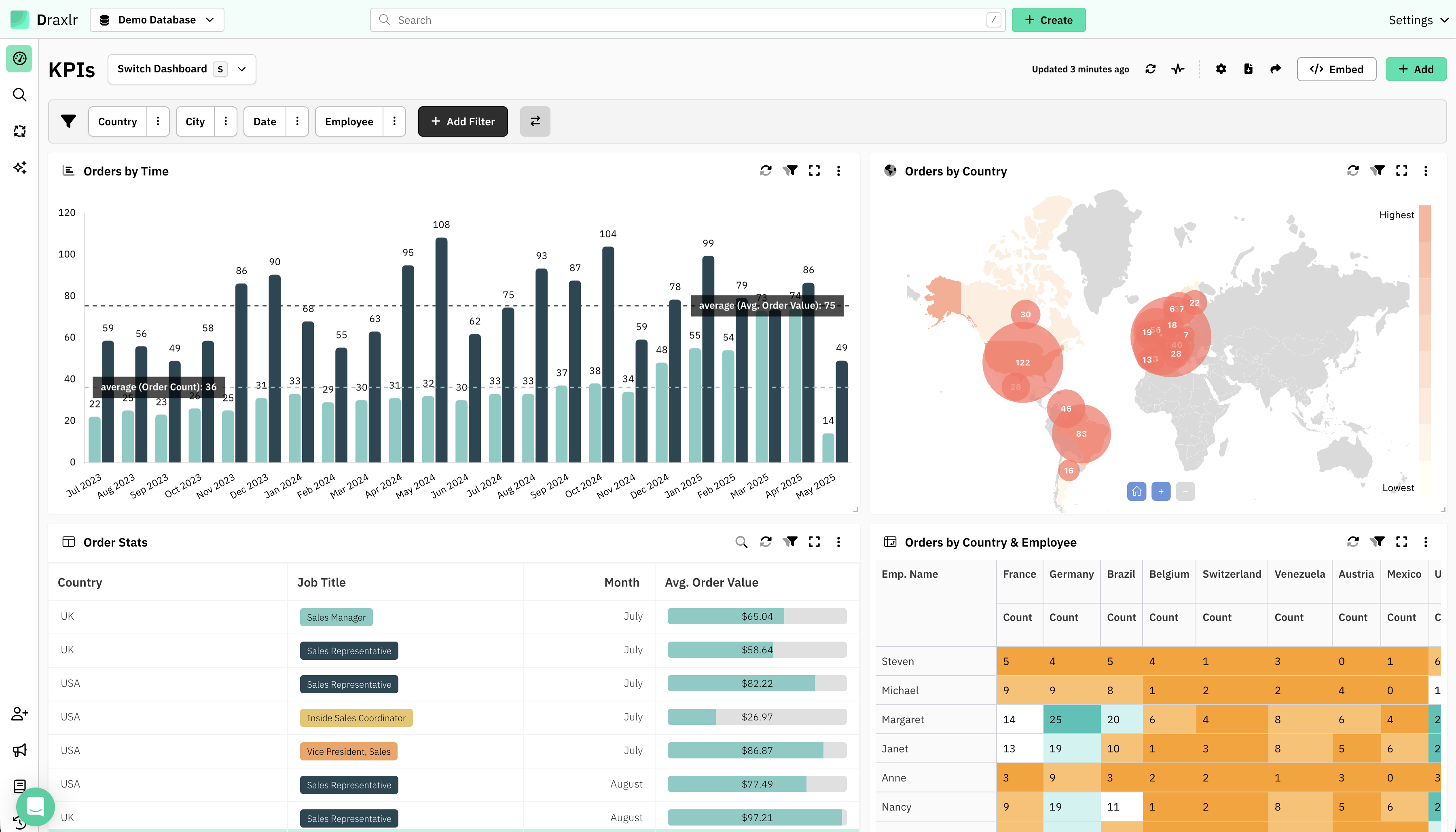
1. Draxlr
AI powered alternative to Metabase for non technical teams
- AI assisted SQL generation from natural language questions
- Visual query builder for filters, joins, and aggregations
- Real time dashboards connected to live databases
- Slack and email alerts when metrics change
- Public sharing and embeddable dashboards for products
- Clean UI designed for founders, PMs, and business users
Best for
- Startups and SaaS teams
- Product and growth teams
- Teams without dedicated data analysts
- Teams that want analytics embedded inside their product
2. Tableau
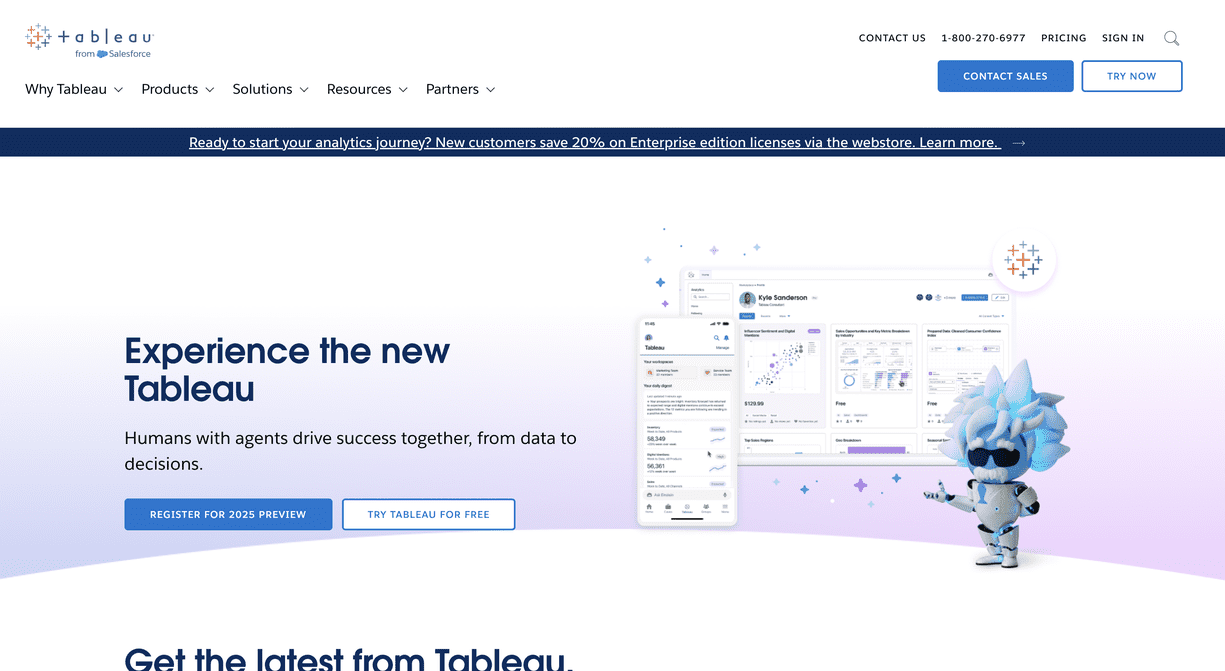
Enterprise business intelligence platform for advanced visualization
- Industry leading visualization and interactivity
- Strong governance and enterprise controls
- Works across many data sources and large datasets
- Great for executive dashboards and reporting
Watch outs
- Steeper learning curve
- Higher cost at scale
- Can be heavy for simple reporting
Best for
- Large enterprises
- Dedicated BI teams
- Advanced reporting and data storytelling
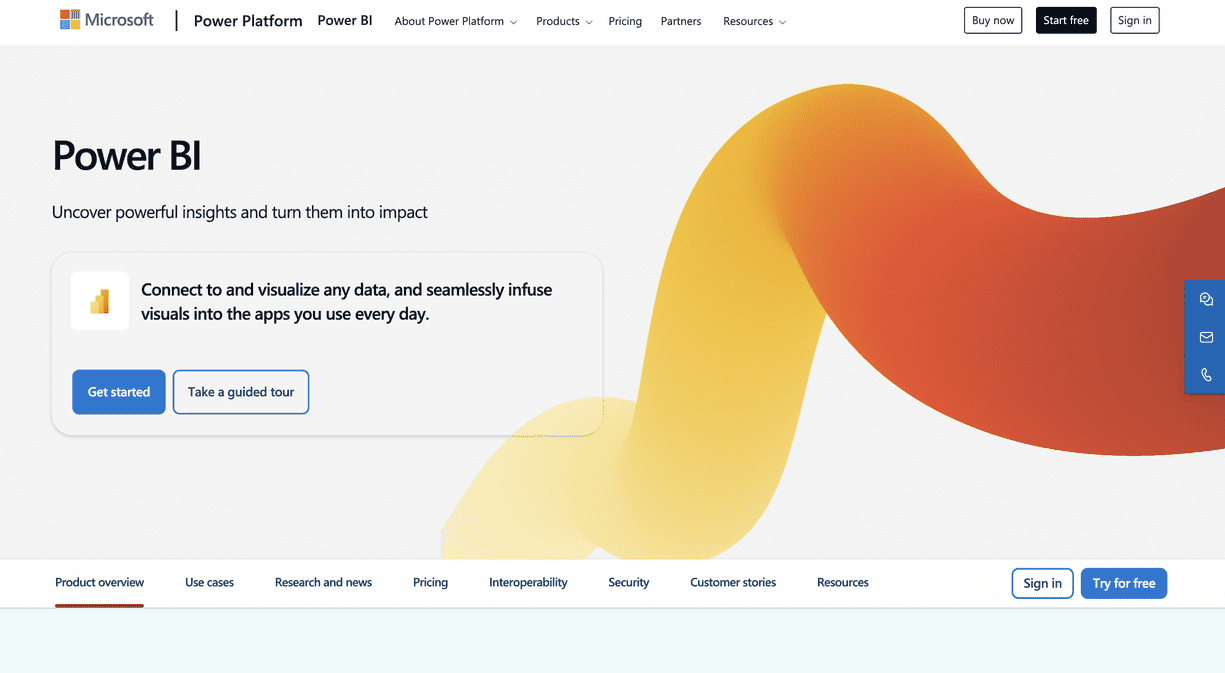
3. Microsoft Power BI
Best Metabase alternative for Microsoft ecosystem users
- Deep integration with Excel, Azure, Teams, and Office 365
- Drag and drop dashboards and reports
- Natural language Q and A features for basic insights
- Strong security and governance options for larger orgs
Watch outs
- Advanced capabilities may require premium licensing
- Data modeling can feel complex for smaller teams
- Less flexible for product embedded analytics
Best for
- Organizations already using Microsoft tools
- Finance and operations reporting
- Structured governance environments
4. Qlik
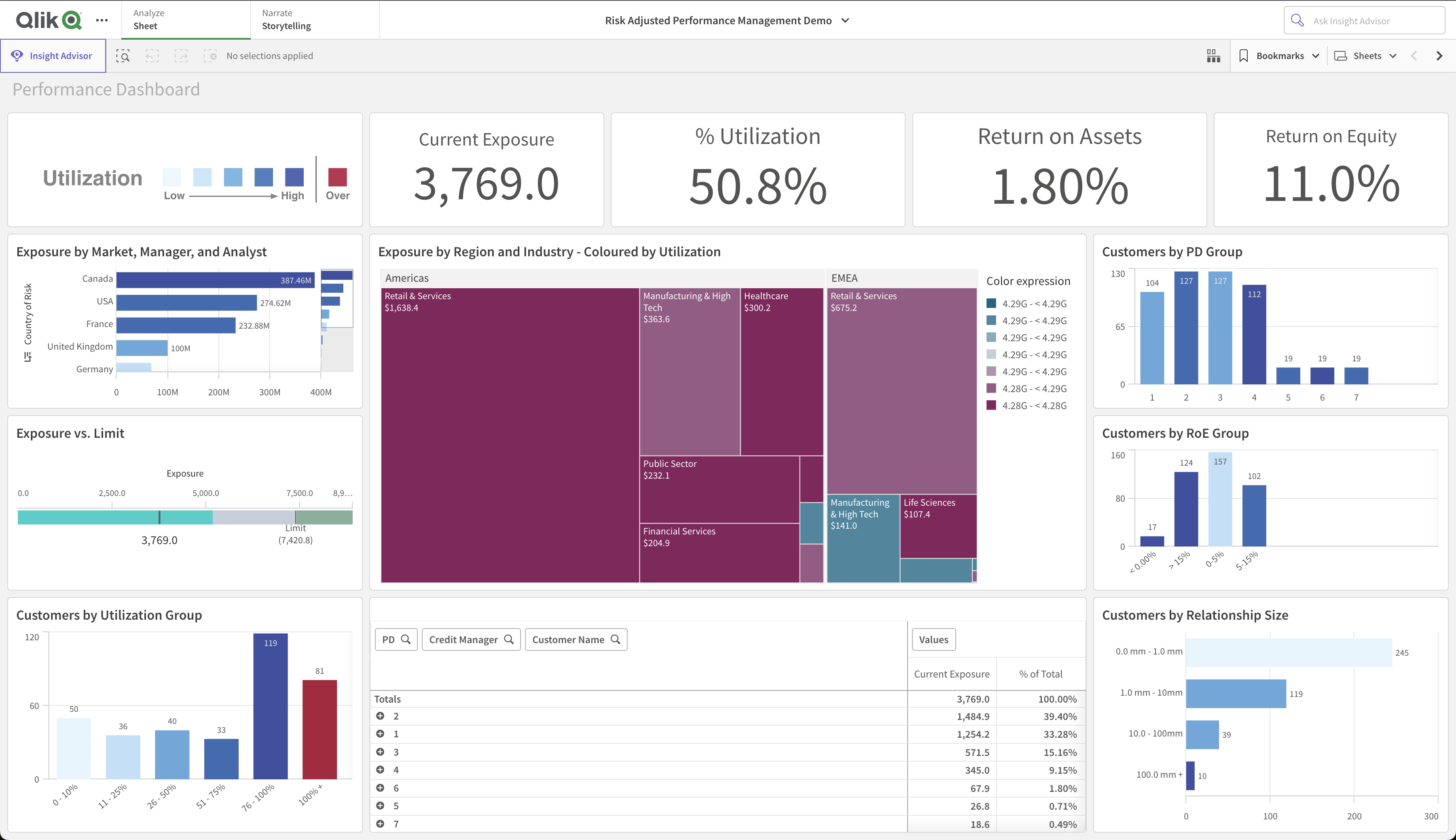
Governed Business Intelligence with Associative Analytics
- Associative data model that lets users explore data from any angle without breaking context
- Strong support for governed self-service analytics
- Handles complex, multi-source enterprise datasets well
- Advanced data preparation and transformation capabilities
- Built-in security, permissions, and audit controls
Watch outs
- Steeper learning curve for new users
- Higher cost compared to lightweight BI tools
- Less intuitive for teams looking for quick, ad-hoc insights
Best for
- Large enterprises
- Regulated industries like finance, healthcare, and manufacturing
- Teams that need strong governance and controlled analytics at scale
5. Sisense
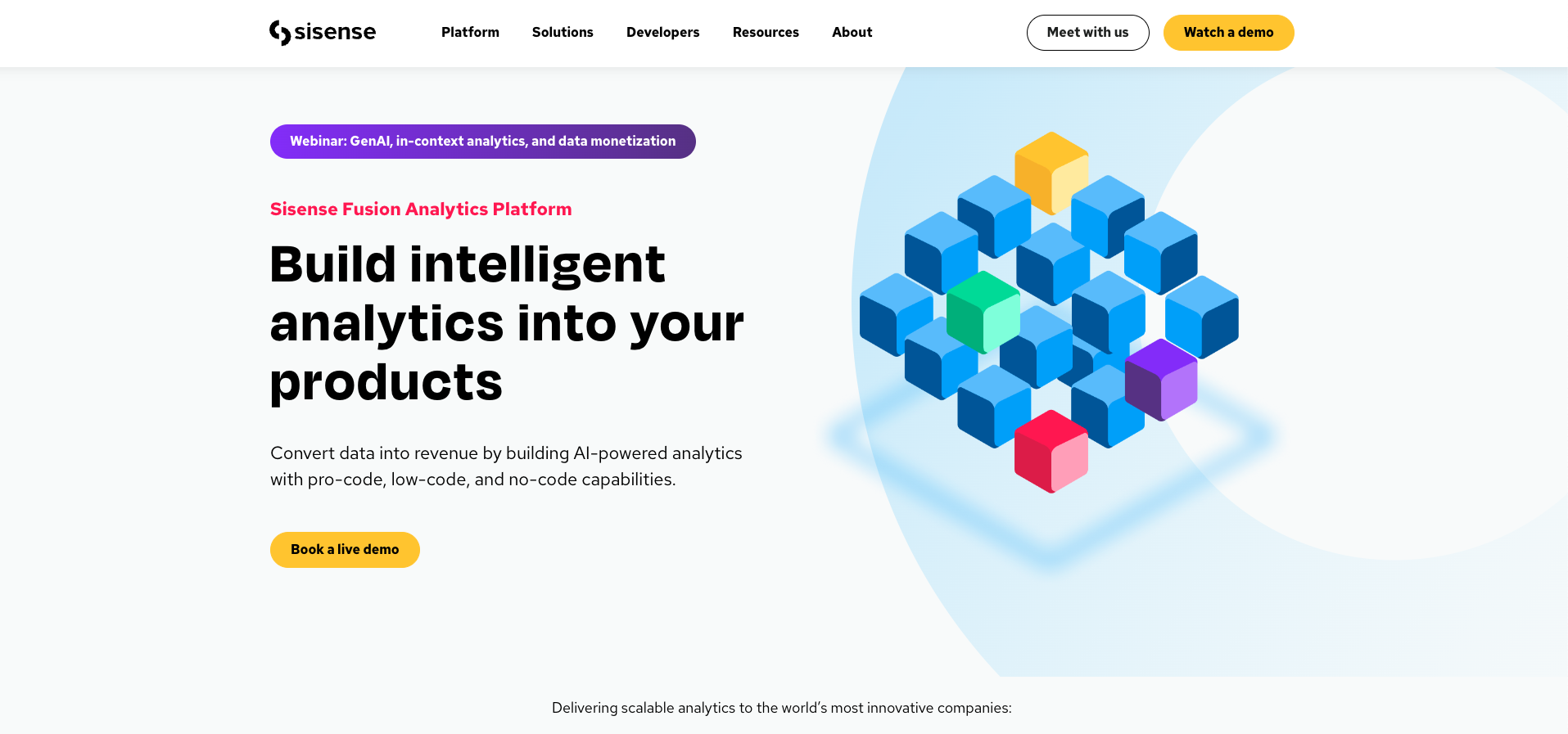
Embedded Analytics for Customer-Facing Products
- Powerful embedded analytics using APIs and SDKs
- Designed for customer-facing dashboards and reports
- Scales well for external and multi-tenant analytics use cases
- Supports a wide range of data sources and cloud warehouses
- Flexible theming and white-labeling options
Watch outs
- Setup and customization require engineering effort
- More complex than internal-only BI tools
- Pricing can be high for smaller teams
Best for
- SaaS companies offering analytics to customers
- Product teams building data-driven features
- Organizations that need white-labeled or embedded dashboards
6. Sigma
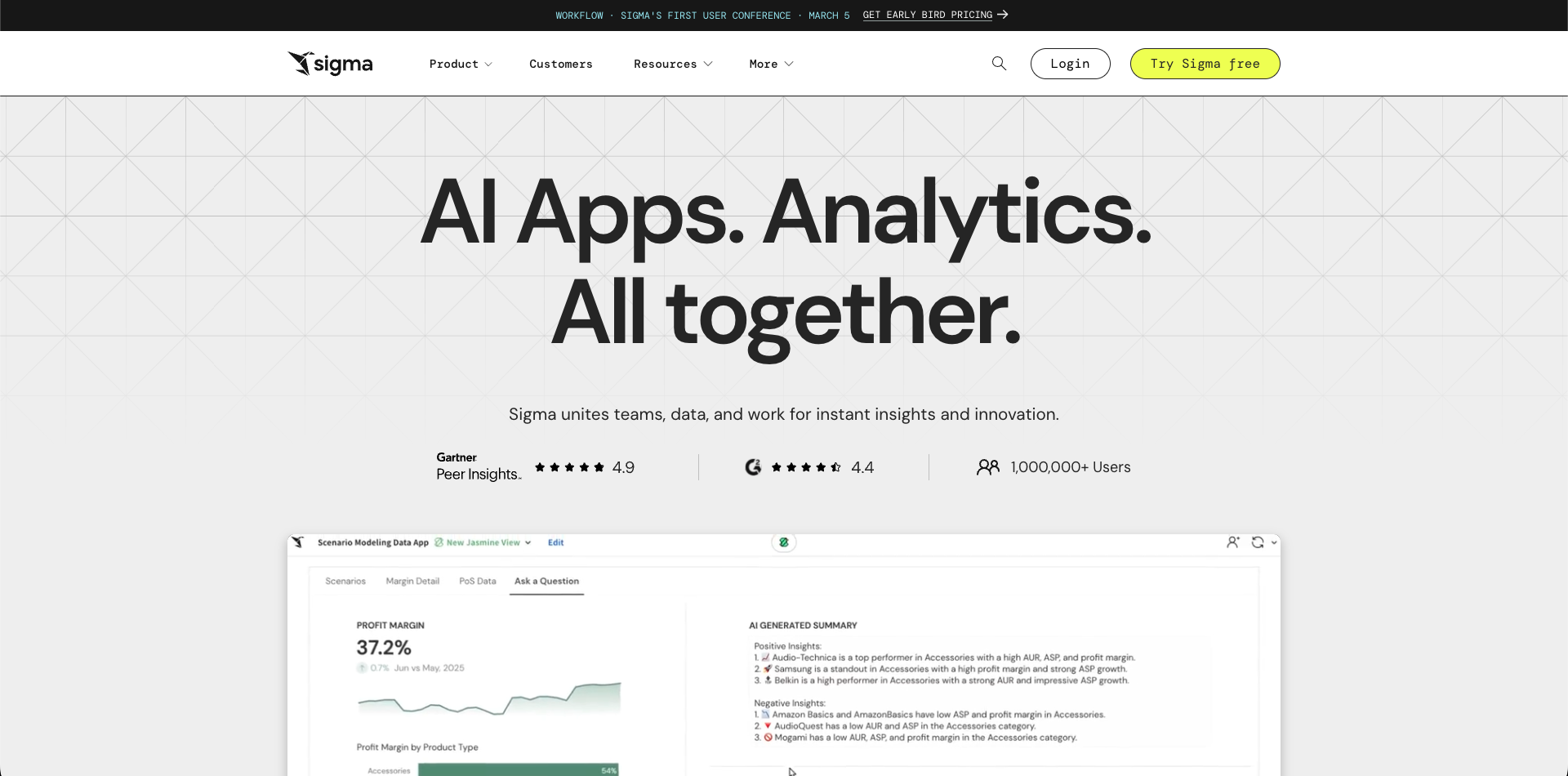
Spreadsheet style BI for cloud data warehouses
- Spreadsheet like interface that business teams adopt quickly
- Live queries on cloud warehouses
- Governance features like lineage and permissions
- Good balance between self service and analyst depth
Watch outs
- Higher pricing
- Best for warehouse first organizations
- Less focus on embedded analytics
Best for
- Cloud warehouse users
- Analytics teams partnering with business users
- Teams that prefer spreadsheet workflows
FAQs
What is the best Metabase alternative in 2026
The best alternative depends on your needs. Draxlr works well for AI assisted self service analytics. Tableau and Power BI are strong enterprise options. Qlik and Sisense fit governed and embedded analytics use cases.
Is Metabase still a good BI tool in 2026
Yes. Metabase remains useful for SQL friendly teams, but many organizations move on when they need stronger AI support or easier access for non technical users.
Which Metabase alternative is best for non technical users
Draxlr and Sigma are generally easier for non technical users. Draxlr emphasizes AI driven insights, while Sigma offers a spreadsheet style interface.
Are there enterprise grade alternatives to Metabase
Yes. Tableau, Power BI, Qlik, and Sisense are all enterprise grade BI platforms used at scale.
Which BI tool works best for embedded analytics
Sisense and Draxlr are commonly used for embedded analytics inside customer facing applications.