Top Metabase Alternatives for Startups, Teams & Enterprises in 2026
Looking for the best Metabase alternatives in 2026? Compare top BI tools for startups, teams, and enterprises by features, pricing, AI capabilities, and embedded analytics to find the right fit.
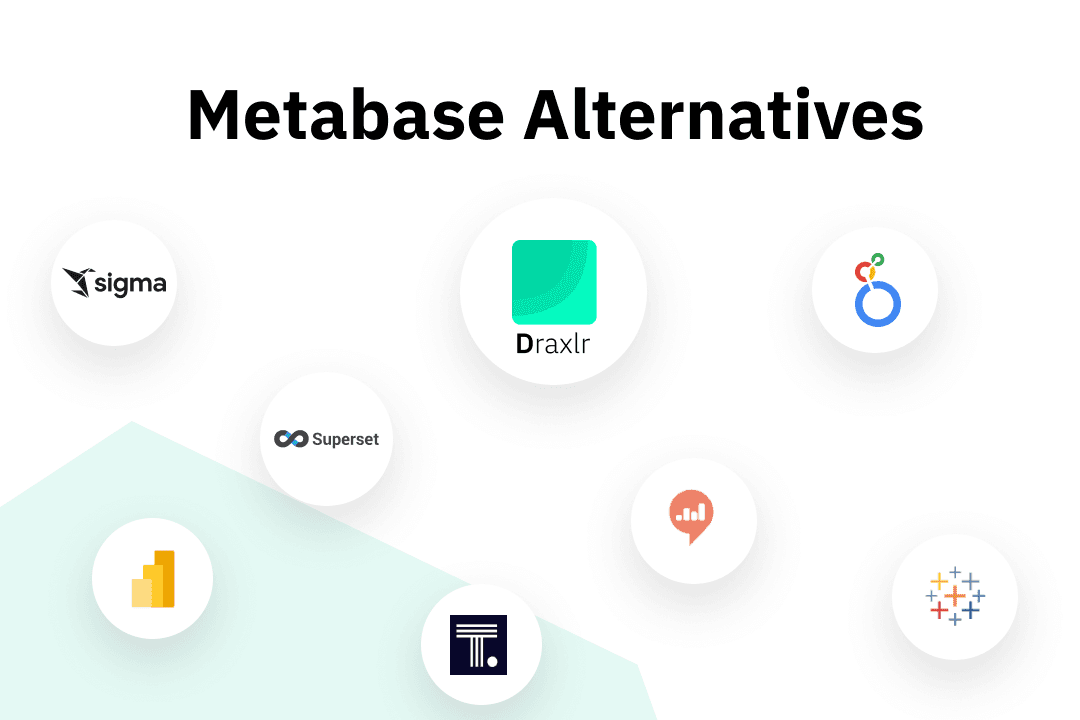
Metabase has long been a go-to business intelligence tool. It is open-source, easy to set up, and friendly enough for non-technical users to build their first dashboards. But as teams grow, data gets more complex, and business requirements evolve, many organizations find themselves hitting Metabase's ceiling.
If you're evaluating Metabase alternatives in 2026, this guide breaks down the best options across every stage, from early-stage startups watching their budget to enterprise data teams that need governance, scale, and advanced analytics.
Why Teams Start Looking for Metabase Alternatives in 2026
Metabase is a solid starting point, but it comes with limitations that tend to surface as companies scale. To understand where it falls short, we spent time reading through hundreds of user reviews on G2, Capterra, and Software Advice.
These aren't dealbreakers for every team, but they're real friction points that drive people toward alternatives. Here's what the market looks like in 2026.
Limited true self-service analytics. Business users frequently get stuck on pre-made SQL queries. Any data exploration beyond the basics typically requires a data engineer to step in, creating bottlenecks and slowing down decisions.
Performance at scale. Metabase queries your database directly, which works fine for small datasets but leads to performance bottlenecks as data volumes grow.
Pricing that punishes growth. Metabase's interactive embedding and advanced features like row-level security, SSO, white-labeling are gated behind Pro and Enterprise tiers. A SaaS company scaling to 1,000 users can find itself paying upward of $10,000 per month on the per-viewer model.
Limited visualization. For teams that rely on geographic or density-based analysis, this is a hard blocker. Heat maps are a fundamental chart type in modern BI and are supported by most competitors, but Metabase has no native support for them.
The dashboard creation UI needs work. Even users who like Metabase for querying find the dashboard builder frustrating. The UI for assembling and arranging dashboards feels underdeveloped, with limited layout flexibility, poor controls for sizing and positioning widgets, and a general lack of polish that makes building presentation-ready dashboards harder than it should be.
Integration is painful and support is limited. Getting Metabase to play well with the rest of a modern data stack takes more effort than it should. Reviewers flag integration as "challenging" and when things break, customer support feels limited and slow to respond.
Audit logs and admin tools are paywalled. Unless you're on the more expensive Enterprise edition, audit logs and content-copying tools are either absent or severely limited. For teams that need to track who accessed what, reproduce dashboard configurations across environments, or meet basic compliance requirements, this creates a frustrating paywall. It's the kind of feature that feels like it should be table stakes and is, on most competing platforms.
The open-source version comes with a developer dependency. Self-hosting Metabase is free, but it's not actually free of cost. Running the open-source version requires ongoing developer involvement for setup, maintenance, upgrades, and debugging. Teams without dedicated engineering resources often find the "free" option isn't really free once they factor in the time it takes to keep it running. This is a significant consideration for startups and small teams evaluating Metabase against cloud-hosted alternatives.
Best Metabase Alternatives in 2026 at a Glance
| Tool | Best For | Open Source | AI capabilities | Pricing Starts At |
|---|---|---|---|---|
| Draxlr | Startups and teams wanting fast, AI-powered SQL analytics | No | Strong | $25/month |
| Apache Superset | Data teams wanting open-source power | Yes | Limited | self-hosted |
| Redash | SQL-first lightweight teams | Yes | Moderate | Custom (enterprise) |
| Sigma Computing | No-code analytics on spreadsheet interface | No | Limited | Custom |
| Power BI | Microsoft-heavy organizations | No | Moderate | $14/user/month |
| Tableau | Advanced visualization and enterprise BI | No | Moderate | $15/user/month |
| ThoughtSpot | AI and search-driven analytics | No | Strong | Custom |
| Looker | Large enterprises with complex data models | No | Moderate | Custom (enterprise) |
Top Metabase Alternatives in 2026 for Startups
1. Draxlr
If you're looking for the closest Metabase alternative that actually fixes Metabase's biggest pain points without adding complexity or ballooning your costs, Draxlr is the strongest contender in 2026.
Draxlr is a next-generation BI tool built for teams that live in SQL databases. It connects directly to PostgreSQL, MySQL, Redshift, BigQuery, Databricks, and more, and gives every type of user a way to query and explore data. Non-technical users get a visual query builder, analysts and engineers get a full SQL editor, and an AI-powered Text-to-SQL layer converts plain English questions into working queries instantly.
Key strengths:
- Three flexible query modes: Visual builder, AI Text-to-SQL, and raw SQL editor
- Connect and start building dashboards in minutes with no DevOps overhead
- Embedded analytics for sharing dashboards inside your SaaS product with customers
- Alerts via Email and Slack when data crosses defined thresholds
- Self-hosted option available for teams that need full data control
- Pricing starting at $25/month with no per-seat surprises as your team grows
- 7-day free trial with no credit card required
- Chat support available for all plans
Where it falls short: Draxlr is optimized for relational SQL databases, so teams primarily working with NoSQL or time-series data may find it less suited to their stack.
Best for: Startups, SaaS companies, and growing teams that want Metabase's ease of use, combined with AI-assisted querying, reliable embedded analytics, and pricing that scales predictably without blowing up at 50 users.
2. Apache Superset
Apache Superset is the most popular open-source Metabase alternative, with over 70,000 GitHub stars and adoption from companies like Airbnb, Dropbox, and Lyft. It offers a no-code visualization builder alongside a powerful SQL IDE, making it workable for both technical and non-technical users.
Key strengths:
- 40+ chart types, cross-filters, and drill-to-detail
- Supports PostgreSQL, BigQuery, Snowflake, MySQL, Redshift, Databricks, and many more
- Row-level security and semantic layer for custom dimensions
- Completely free when self-hosted
Where it falls short: Superset has a steeper learning curve than Metabase and heavier infrastructure requirements. Non-technical users will need guidance to get started, and the initial setup is more involved.
Best for: Startups and growing data teams that want Metabase's power without the licensing cost — and have the technical chops to manage self-hosting.
3. Redash
Redash is a lightweight, SQL-first BI tool with over 28,000 GitHub stars. It's built around the idea of making it fast and easy to query data and build dashboards — without any frills getting in the way.
Key strengths:
- SQL query editor with autocomplete and parameterized queries
- Connects to 35+ data sources including PostgreSQL, MySQL, BigQuery, Redshift, and MongoDB
- Scheduled queries, alerts, and simple dashboard sharing
- Free and self-hostable
Where it falls short: Redash has fewer visualization types than Metabase, a less polished UI, and limited support for non-technical users who don't want to write SQL.
Best for: Technical startups and engineering teams that think in SQL and want a simple, fast tool to query and share results — without the overhead of a full BI platform.
Best Metabase Alternatives in 2026 for Growing Teams
4. Sigma Computing
Sigma Computing takes an unusual approach to BI: it presents data through a spreadsheet-style interface that sits directly on top of your cloud data warehouse. There's no data extracts, no ETL, and no need for SQL — users interact with live warehouse data using familiar spreadsheet logic.
Key strengths:
- No-code exploration with powerful Excel-like formulas
- Runs natively on Snowflake, BigQuery, Redshift, and Databricks
- Write-back capabilities to your data warehouse
- Strong performance on complex queries
Where it falls short: Sigma has an opinionated UI with limited chart customization options. Dashboards embedded into external apps still feel foreign, similar to Metabase's limitations.
Best for: Teams making the jump from spreadsheets to BI, or analysts who want SQL-level power without writing SQL.
5. Power BI
Microsoft Power BI is one of the most widely adopted BI platforms in the world, and for good reason. It combines broad data connectivity, a powerful proprietary analytics language (DAX), and tight integration with the Microsoft 365 ecosystem.
Key strengths:
- Deep integration with Excel, Azure, Teams, and the broader Microsoft stack
- Strong self-service analytics with drag-and-drop dashboards
- Robust governance, workspace controls, and role-based security
- Clear embedded analytics patterns for both "app-owns-data" and "user-owns-data" scenarios
- Pro plan at ~$14/user/month makes it affordable at team scale
Where it falls short: DAX can be challenging to learn, and Power BI's workflow isn't designed for version control — making it harder to manage changes and maintain analytics logic in engineering-style workflows. It's also not ideal for non-Microsoft operating systems like macOS or Linux.
Best for: Teams already invested in the Microsoft ecosystem that need enterprise-grade analytics with mature governance and embedding options.
Best Metabase Alternatives in 2026 for Enterprises
6. Tableau
Tableau is the enterprise standard for data visualization. If you need highly customized, pixel-perfect visuals — complex geospatial analytics, intricate calculation logic, or advanced chart types — Tableau delivers what no other tool comes close to matching.
Key strengths:
- Massive visualization library with virtually unlimited customization
- Strong embedded analytics capabilities with web authoring in-app
- Mature governance, data lineage, and enterprise security
- Tableau Cloud and Server options for flexible deployment
Where it falls short: Tableau is expensive and has a steeper learning curve than Metabase. For teams that don't need its advanced visualization depth, it's often overkill.
Best for: Enterprise data teams and analytics-heavy organizations that need best-in-class visualization, advanced reporting, and a mature ecosystem.
7. ThoughtSpot
ThoughtSpot takes a fundamentally different approach to BI: instead of building dashboards, users search for insights using natural language. The platform's AI engine translates questions like "revenue by region last quarter" into instant answers and visualizations.
Key strengths:
- AI and search-driven analytics reduce dependency on SQL expertise
- Modern SDKs for low-code embedded analytics
- Works natively with cloud data warehouses
- SpotIQ AI engine proactively surfaces anomalies and insights
Where it falls short: ThoughtSpot's search-first philosophy doesn't suit all workflows, particularly teams that rely on traditional semantic modeling or need deeply customized dashboards.
Best for: Enterprises looking to democratize analytics across the business, or product teams that want to expose AI-driven insights to end users without building a custom analytics layer.
8. Looker (Google Cloud)
Looker, now part of Google Cloud, takes a code-first approach to BI built around LookML — a modeling language that defines metrics, dimensions, and relationships in a centralized semantic layer. Every report and dashboard is built on top of this layer, ensuring consistency across the organization.
Key strengths:
- Centralized semantic layer eliminates conflicting metrics across teams
- Git-based version control for all analytics logic
- Deep integration with BigQuery and the broader Google Cloud ecosystem
- Strong API and embedded analytics capabilities
Where it falls short: Looker requires significant investment in LookML modeling before teams see value. It's one of the more expensive options on the market, making it most suitable for large organizations with dedicated analytics engineering resources.
Best for: Large enterprises with mature data stacks that need a governed, centralized source of truth across many teams and use cases.
How to Choose Your Metabase Alternative
There's no universal "best" BI tool. The right choice depends on your team's size, technical depth, use case, and where you're headed in the next 12–18 months. Before shortlisting any tool, work through these questions. Your answers will narrow the field quickly.
Setup & Hosting
- Do you need a self-hosted solution for data privacy or compliance reasons or are you comfortable with a cloud-hosted SaaS tool?
- Do you have a developer available to manage infrastructure, upgrades, and maintenance? If not, open-source self-hosted tools (Superset, Redash) carry a hidden cost.
- How fast do you need to be up and running? Some tools take hours to set up others take weeks of modeling work before they deliver value.
Who Will Use It
- Will your dashboards be used primarily by technical users (analysts, engineers) or non-technical users (marketing, ops, finance, leadership)?
- Do your business users need to explore data on their own or are they happy consuming pre-built dashboards built by the data team?
- Is there a need for natural language or AI querying so non-SQL users can ask their own questions without waiting on an analyst?
Data & Analytics Requirements
- What databases and data sources do you need to connect to? Make sure your shortlisted tool supports all of them natively.
- Do you need advanced chart types like heat maps, funnels, cohort analysis, geospatial maps or will standard bar, line, and pie charts cover most use cases?
- Do you need to blend data from multiple sources in a single dashboard, or are your queries contained to one database?
- Is real-time or near-real-time data a requirement, or is a daily refresh sufficient?
Embedded Analytics
- Do you need to embed dashboards inside your product for your customers to see or is this purely an internal tool?
- If embedding, how much customization do you need? White-labeling, custom themes, row-level permissions per customer?
- Does the tool support embedding via a proper SDK or API — or only via iframes, which limit your flexibility?
Governance & Security
- Do you need row-level security — different users seeing different subsets of data based on their role or account?
- Are audit logs a compliance requirement? (These are paywalled in Metabase unless you're on Enterprise.)
- Do you need SSO, SAML, or SCIM for user management at scale?
Pricing & Scale
- Are you pricing per seat and do you have a clear sense of how many users will need access? Per-seat models can get expensive fast as teams grow.
- Does the tool charge extra for features like embedding, white-labeling, or SSO or are these included?
- What's the realistic total cost at 2x your current user count? Model this before committing.
🤝 Support & Ecosystem
- How active is the community or vendor support? For open-source tools, is there a large enough community to get help when you're stuck?
- Does the tool integrate with the rest of your stack — dbt, Fivetran, Slack alerts, your data warehouse?
- Is the product being actively developed? Check the changelog or GitHub commit history — a tool that hasn't shipped meaningful updates in 6+ months is a risk.
Conclusion
Metabase remains a genuinely useful tool, especially for technical teams that want a quick, low-cost way to connect to a database and share dashboards internally. But in 2026, the market has moved to AI-assisted querying, warehouse-native analytics, and better self-serve experiences by raising the bar considerably.
Whether you're a startup looking to replace a free tier you've outgrown, a product team needing cleaner embedded analytics, or an enterprise standardizing on governed BI, there's a Metabase alternative on this list that fits your context.
The best move is to identify your top two or three requirements, shortlist two tools, and run a real-world pilot with your actual data before committing.
FAQs
1. Is Metabase really free?
Metabase's open-source version is free to self-host, but it comes with a developer dependency where someone needs to set it up, maintain it, and handle upgrades. The cloud-hosted version starts at $500/month. Advanced features like SSO, audit logs, and white-labeling require the Enterprise plan.
2. What is the best free Metabase alternative?
Draxlr is the best Metabase alternative for teams looking for a free trial to get started. It offers a 7-day free trial with no credit card required, giving you full access to connect your database, build dashboards, and explore AI-powered querying before committing. For teams that need a completely free self-hosted option, Apache Superset and Redash are strong open-source picks, though both require developer involvement to set up and maintain.
3. Which Metabase alternative is best for non-technical users?
Draxlr and Sigma Computing are the strongest picks. Draxlr offers a visual query builder and AI-powered Text-to-SQL so business users can explore data without writing a single line of SQL. Sigma Computing uses a familiar spreadsheet-style interface that feels natural for Excel-trained users.
4. Can I embed dashboards from Metabase alternatives into my product?
Yes. Several tools support embedded analytics better than Metabase. Draxlr offers embedded dashboards with customer-facing sharing. Looker and ThoughtSpot provide full SDKs for white-labeled embedding. Metabase's iframe-based embedding is functional but limited in customization without an expensive Enterprise plan.
5. Which Metabase alternative is best for startups?
Draxlr is the top pick for startups. It's fast to set up, starts at $25/month, supports AI querying, and scales without per-seat pricing surprises. For startups with strong technical teams and tight budgets, Apache Superset offers comparable features for free when self-hosted.
6. Is Metabase good for large enterprises?
Metabase can work for enterprises on the managed Enterprise plan, but most large organizations outgrow it. Tools like Looker, Tableau, and Power BI offer stronger governance, centralized semantic layers, mature role-based access controls, and the enterprise support contracts that large organizations typically require.