Best Looker Alternatives in 2026
Explore the best Looker alternatives in 2026. Compare pricing, AI features, ease of use, and scalability to find the right BI tool for your team.
If you're evaluating Looker alternatives, you're not alone. Looker is a powerful business intelligence platform but it comes with serious trade-offs. Pricing starts at $60,000 per year, there's no free trial, and making the most of it requires engineers who know LookML, Google's proprietary modeling language. For many teams, those trade-offs simply don't make sense anymore.
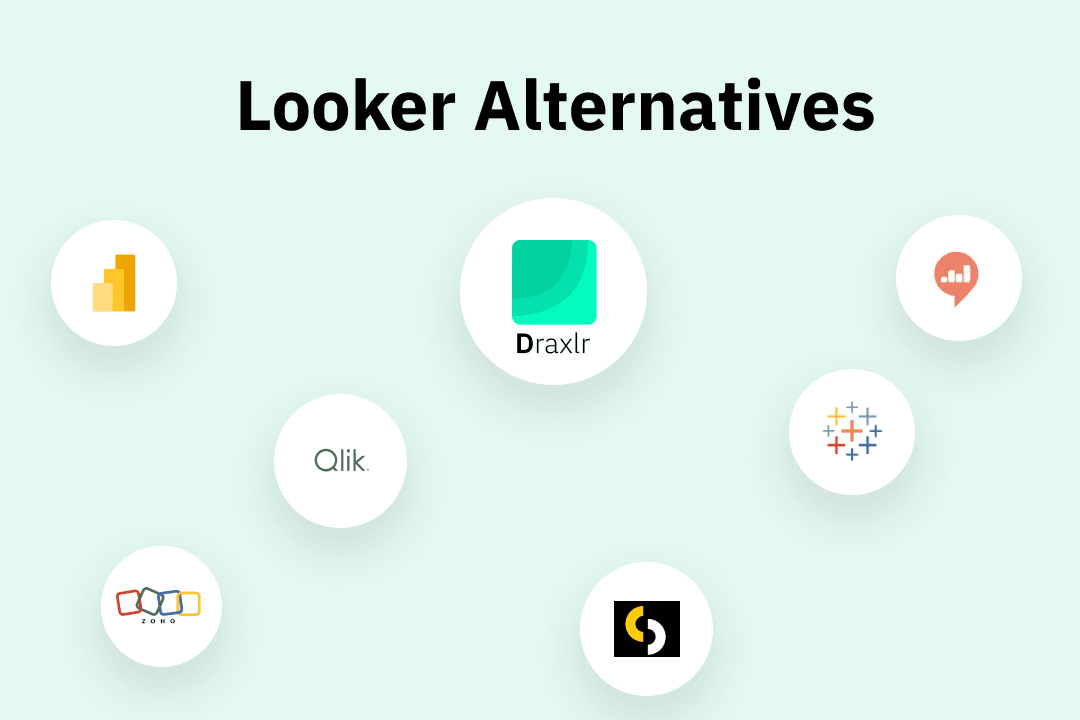
Whether you're a startup watching costs, a mid-size team tired of depending on engineers for every report, or an enterprise evaluating your BI stack, there are strong Looker alternatives worth knowing about. This guide breaks down the seven best options in 2026 what they do well, where they fall short, and which teams each one fits best.
Why Teams Look for Looker Alternatives
Before diving into the list, it helps to understand why Looker loses deals:
Cost. At $60,000+ per year for the base license, plus $400/year per dashboard viewer, Looker is inaccessible for most small-to-mid-size businesses. Costs can escalate quickly as your team grows.
LookML dependency. Looker's semantic layer is built on LookML, a proprietary modeling language. Non-technical users can't self-serve without a developer building views and explores first.
Google Cloud lock-in. Since Google's acquisition, Looker has increasingly pushed users toward BigQuery and the Google Cloud ecosystem, which isn't ideal for teams on other stacks.
No free trial. Most teams can't even test Looker before committing to enterprise negotiations.
Best Looker Alternatives in 2026 at a Glance
| Tool | Starting Price | Free Trial | SQL-Native | Embedded Analytics |
|---|---|---|---|---|
| Draxlr | $25/month | Yes | ✅ | ✅ |
| Tableau | $15/user/month | Yes | Partial | ✅ |
| Power BI | $14/user/month, paid yearly | Yes | Partial | Limited |
| Sisense | Custom | Yes | ✅ | ✅ |
| Qlik Sense | $300/month | Yes | Partial | ✅ |
| Zoho Analytics | $30/month | Yes | Partial | Limited |
| Redash | Free | Yes | ✅ | Limited |
1. Draxlr
AI-powered self-serve Looker Alternative for SQL Teams
Draxlr is an AI-powered BI tool built around your SQL database. You connect your database like PostgreSQL, MySQL, BigQuery, Snowflake, Redshift, and more and immediately start building dashboards using a visual query builder, a plain SQL editor, or Draxlr's AI-powered Text-to-SQL feature that lets you ask questions in plain English.
What makes Draxlr stand out as a Looker alternative is its combination of depth and accessibility. Technical users get full SQL control, version history, and complex joins. Non-technical users get an intuitive drag-and-drop interface and AI-generated queries. Both can work in the same tool without friction.
Key Features
- Connects to 10+ SQL databases including PostgreSQL, MySQL, BigQuery, Snowflake, Redshift, Supabase, ClickHouse, and more
- AI-powered Text-to-SQL: write queries using plain English
- Visual query builder with nested grouping, aggregation, and virtual columns
- Beautiful dashboards with charts, pivot tables, drill-downs, and drill-throughs
- Embedded analytics with React and Vue SDKs for shipping analytics inside your product
- Self-hosted deployment option for full data control
- White-label BI for agencies and SaaS products
- Automated alerts, PDF exports, and email summaries
- 7-day free trial with no credit card required
Pricing
- Lite: $25/month (1 database, 1 user, 10 AI credits)
- Premium: $75/month (2 databases, 10 users, 100 AI credits)
- Power: $125/month (5 databases, 30 users, 300 AI credits)
- Self-hosted and enterprise plans available
Why Draxlr beats Looker
Looker costs 40–60x more per year, requires LookML expertise, and has no free trial. Draxlr gives you SQL-native analytics, AI assistance, embedded capabilities, and self-hosting—for a fraction of the price. Teams are typically up and running within hours, not weeks.
Best for
Startups, SaaS companies, and data teams that want powerful SQL-based analytics without the enterprise price tag.
2. Tableau
Best Looker alternative for Advanced Data Visualization
Tableau is the gold standard for complex, interactive data visualization. Its drag-and-drop interface is intuitive for analysts, it handles large datasets well, and Tableau Public is a strong community resource. However, Tableau Creator licenses start at $75/user/month, and its embedding and governance features don't match enterprise BI platforms like Looker at scale.
Key features
- Drag-and-drop visualization builder with 20+ chart types and a VizQL engine for code-free visual querying
- Tableau Prep for visual data cleaning, reshaping, and pipeline building before analysis
- Live and extract connection modes to balance real-time freshness with query performance
- Level of Detail (LOD) expressions and calculated fields for complex, multi-granularity analytics
- 80+ native data connectors with support for ODBC/JDBC and Tableau Embedded Analytics for third-party app integration
Pricing
Viewer $15/user/month, Explorer $42/user/month, Creator $75/user/month
Best for
Data analysts and scientists who need the most powerful visualization capabilities available.
3. Power BI
Best Looker Alternative for Microsoft Ecosystem Teams
Microsoft's Power BI is the most widely adopted BI tool in the world, and for good reason. It integrates tightly with Excel, Azure, and Microsoft Teams, has an enormous library of connectors, and offers impressive visualization capabilities. The desktop version is free, and the Pro plan comes in at $10/user/month.
The catch? Power BI's data model can be complex for non-technical users, the mobile experience lags behind competitors, and large datasets often require Azure infrastructure investment to perform well.
Key features
- Multiple native data connectors including Azure, Salesforce, Google Analytics, and SharePoint
- DAX language for building custom calculations, measures, and advanced data models
- Power Query for data transformation, cleaning, and shaping before it reaches dashboards
- Interactive visualizations including charts, maps, KPI cards, matrix tables, and a custom visuals marketplace
- Row-level security and integration with Microsoft Teams, SharePoint, and Excel for access control and collaboration
Pricing
Starts at $14/user/month, paid yearly
Best for
Your team lives in Microsoft products and you have some technical capacity to build and maintain data models.
4. Sisense
Best Looker Alternative for Embedded Analytics at Scale
Sisense is an end-to-end analytics platform designed around embedded analytics and complex data models. It uses an in-chip technology to handle large datasets efficiently and offers a flexible JavaScript SDK for embedding. The downside is pricing—Sisense is enterprise-tier and requires custom quotes—and the platform has a steeper learning curve than most alternatives.
Key features
- Elasticube in-chip analytics engine for fast queries across large, multi-source datasets
- JavaScript SDK and REST APIs for embedding analytics into external applications
- SSO and multi-tenancy support for white-label and multi-client deployments
- 100+ data connectors covering databases, cloud applications, and flat files
- Row-level and widget-level security for granular data access control
Pricing
Custom pricing (enterprise). Contact sales.
Best for
SaaS companies that need to embed analytics inside their product for customers.
5. Qlik Sense
Best Looker alternative for Associative Data Exploration
Qlik Sense uses an associative engine that highlights relationships between data points as you filter, making it ideal for exploratory analysis. It's highly scalable, supports governed data environments, and offers a polished embedding SDK. Like Looker, it's enterprise-priced and complex to set up.
Key Features
- Associative analytics engine that surfaces data relationships across all fields as users apply filters
- Insight Advisor for natural language search and AI-generated chart recommendations
- Drag-and-drop visual analytics builder with smart chart type suggestions
- Role-based governance, data lineage tracking, and enterprise access controls
- REST API and mashup SDK for embedding Qlik visualizations in external applications, with multi-cloud and on-premises deployment support
Pricing
Business plan starts around $300/month; Enterprise requires custom quote
Best for
Enterprise teams that need to explore relationships across large, complex datasets.
6. Zoho Analytics
Best Looker Alternative for SMBs on a Budget
Zoho Analytics offers drag-and-drop dashboards, AI-powered analytics via its Zia assistant, and deep integration with the Zoho ecosystem (CRM, Desk, Projects, etc.). It's priced very accessibly and can be up and running quickly. It does struggle with very large datasets and the visualizations aren't as polished as Tableau or Draxlr.
Key Features
- Drag-and-drop report and dashboard builder with 50+ chart types
- Zia AI assistant for natural language querying and automated insight generation
- 500+ data connectors including Zoho apps, Salesforce, Google Ads, Shopify, and QuickBooks
- Data blending to combine and analyze data from multiple sources in a single report
- Row-level and column-level security with scheduled email delivery of reports and dashboards
Pricing
Starts at $30/month for 2 users
Best for
Small businesses needing an affordable, easy-to-use BI tool.
7. Redash
Best Looker Alternative for Open-Source Option
Redash is an open-source BI tool that connects to virtually any SQL database and lets teams write queries, visualize results, and share dashboards. It's free to self-host and popular in engineering-heavy organizations. The trade-offs are real though: there's no AI assistance, visualizations are limited, and self-hosting requires DevOps capacity.
Key Features
- SQL editor with autocomplete, query snippets, and support for parameterized queries
- 35+ data source connectors including PostgreSQL, MySQL, BigQuery, Redshift, MongoDB, and Elasticsearch
- Basic visualization types including line, bar, pie, scatter, cohort, and table views
- Query scheduling for automated data refresh and threshold-based alerting
- Self-hostable via Docker with user management and group-level data source permissions
Pricing
Free (open source), cloud plan available
Best For
Strong engineering resources, prioritize cost-cutting, and need a no-frills querying and sharing tool.
How to Choose the Right Looker Alternative
Choose Draxlr if you want a full-featured SQL BI tool with AI assistance, great customer support, embedded analytics, and self-hosting—at a price your team can actually afford. It's the best fit for startups, SaaS companies, and any team that works directly with SQL databases.
Choose Tableau if data visualization quality is your top priority and you're willing to pay per-seat.
Choose Power BI if your organization is deeply embedded in the Microsoft ecosystem and you have technical users who can build data models.
Choose Sisense if you're building a SaaS product and need a proven embedded analytics platform with enterprise support.
Choose Qlik Sense if your enterprise needs advanced associative analytics with complex data governance.
Choose Zoho Analytics if you're a small business already using Zoho products and want affordability over depth.
Choose Redash if you're engineering-first, cost-sensitive, and don't need AI features or polished dashboards.
Conclusion
Looker remains a strong platform for enterprises that need governed, semantic-layer analytics at scale. But for most teams, the combination of high cost, LookML complexity, and Google Cloud dependency makes it hard to justify — especially when capable alternatives exist at a fraction of the price.
The right Looker alternative depends on your team's priorities. If SQL flexibility and self-hosting matter most, look for tools built around direct database connectivity. If you're deep in the Microsoft or Google ecosystem, native integrations will save you significant setup time. If embedded analytics for a SaaS product is the goal, prioritize platforms with mature SDKs and white-labeling support.
Most tools on this list offer a free trial or free tier, so the cost of evaluating your options is low. Shortlist two or three based on your stack and team size, run a quick proof of concept, and choose the one that your team will actually use.
FAQs
What are the best Looker alternatives in 2026?
The best Looker alternatives in 2026 are BI platforms that offer SQL-native querying, self-service dashboards, AI-assisted analytics, and flexible pricing without requiring a proprietary modeling language or an enterprise contract.
Why are teams switching from Looker to alternatives?
Teams switch from Looker primarily because of cost ($60,000+/year), the dependency on LookML expertise, Google Cloud lock-in, and a lack of free trial. Many teams find that alternative tools offer comparable or better capabilities at a fraction of the price.
What is the cheapest Looker alternative?
Open source BI tools offer the most affordable entry point — they can be self-hosted at no cost. For commercial alternatives with AI features, embedded analytics, and managed hosting, plans start as low as $25–30/month depending on the platform.
Which Looker alternatives work without LookML or a semantic layer?
Most Looker alternatives do not require LookML or any proprietary modeling layer. Many tools let you connect your database and start querying immediately using a visual query builder, natural language AI, or raw SQL with no upfront modeling work.
Which Looker alternative is best for non-technical users?
The best Looker alternatives for non-technical users offer AI-powered Text-to-SQL, drag-and-drop query builders, and guided dashboard creation so business users can get answers from data without writing SQL or depending on a data team.
Which Looker alternatives support embedded analytics?
Several Looker alternatives support embedded analytics, offering JavaScript SDKs, React and Vue components, white-labeling, domain restrictions, and multi-tenant configurations. These features are especially useful for SaaS companies that need to ship analytics inside their product.
Can small businesses use a Looker alternative?
Yes. Several Looker alternatives are designed specifically for small businesses, with affordable pricing, minimal setup, and no requirement for dedicated data engineers. Many offer free trials so teams can evaluate before committing.